

Index
- Why Cotton Dyes Unevenly
- Preparing Cotton for Dyeing: Washing and Soaking
- Dosages, Temperature and Times for a Uniform Color
- How to Dye Clothes in the Washing Machine Without Mistakes
- Dyeing Fabrics Without Stains: Manual Techniques
- Fixing Color on Fabrics: Rinsing and Duration
- Common Mistakes and How to Fix Dyeing Problems
- Frequently Asked Questions
Last updated: October 4, 2026
Why Cotton Dyes Unevenly
Dyeing cotton evenly is a goal that many people fail to achieve on the first try, and the key is to dye cotton without surprises.
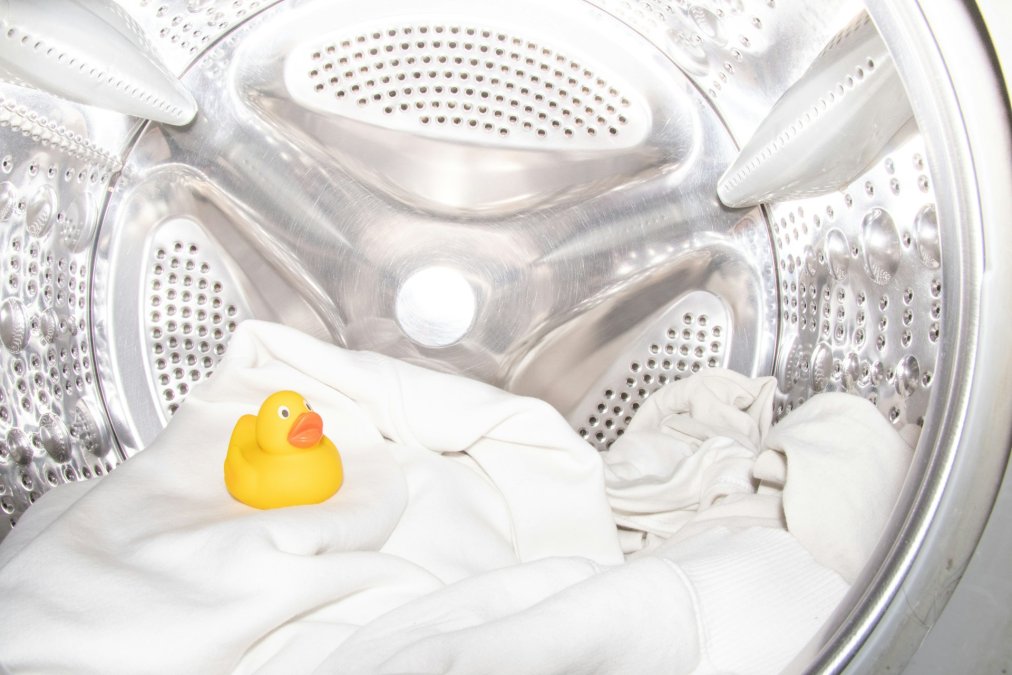
Cotton is a natural fiber with an irregular structure.
In this guide by Aybel, we explain why uneven dyeing can happen and how to avoid it. You'll see precise dosages, temperatures, and times, with techniques designed for home dyers.
The most common causes of uneven dyeing are few and recognizable:
- Fabric not washed before dyeing
- Dye bath too small in relation to the weight of the garment
- Insufficient agitation during immersion
- Unstable or too low temperature
- Rinsing too quickly after dyeing
Preparing Cotton for Dyeing: Washing and Soaking
Preparing cotton for dyeing means removing any residue that prevents the dye from binding to the fibers. Without this step, the dye will run and leave stains.
Follow these steps:
- 🫧 Wash the garment in hot water with a mild detergent.
- 🙅🏻♂️ Don't use fabric softener: it creates a barrier on the fabric.
- 💧 Soak the garment in warm water for 30 minutes.
- 🌀 Wring out without spinning and leave the fabric slightly damp.
A damp fabric absorbs dye more evenly than a dry one. This detail makes a huge difference in the final result.
Always check the garment's label. Pure cotton dyes well, while blends with polyester require care, as this fiber does not absorb dye.
Dosages, Temperature and Times for a Uniform Color
The correct dosage depends on the weight of the dry fabric, not the volume of the garment. Getting it wrong is the main cause of disappointing results, because cotton only absorbs the amount of dye it can bind to the fibers: the rest remains in the dye bath and, if the bath is too small, it redistributes unevenly.
With Aybel dyes, a 10g sachet optimally dyes 250g of dry fabric. Using less product will result in a lighter color. A 225ml bottle covers 1kg of fabric, ideal for sheets, sofa covers, or curtains.
Dry fabric weight |
Recommended format |
Water needed |
Dyeing time |
|---|---|---|---|
Up to 250 g |
1 sachet of 10 g |
5-6 liters |
40 minutes |
Up to 1 kg |
1 bottle of 225 ml |
15-20 liters |
45-60 minutes |
Over 1 kg |
Large format |
Proportional |
60 minutes |
The bath-to-fabric ratio: the true driver of uniformity
The bath-to-fabric ratio is the liter of water per 100 grams of dry fabric. For cotton, a minimum ratio of 20:1, that is 20 litres of water for every kg of fabric.
A higher ratio, between 30:1 and 40:1, is even better for thicker items like sweatshirts, towels, or jeans. Excess L doesn't dilute the color; it distributes the dye more evenly across the entire surface.
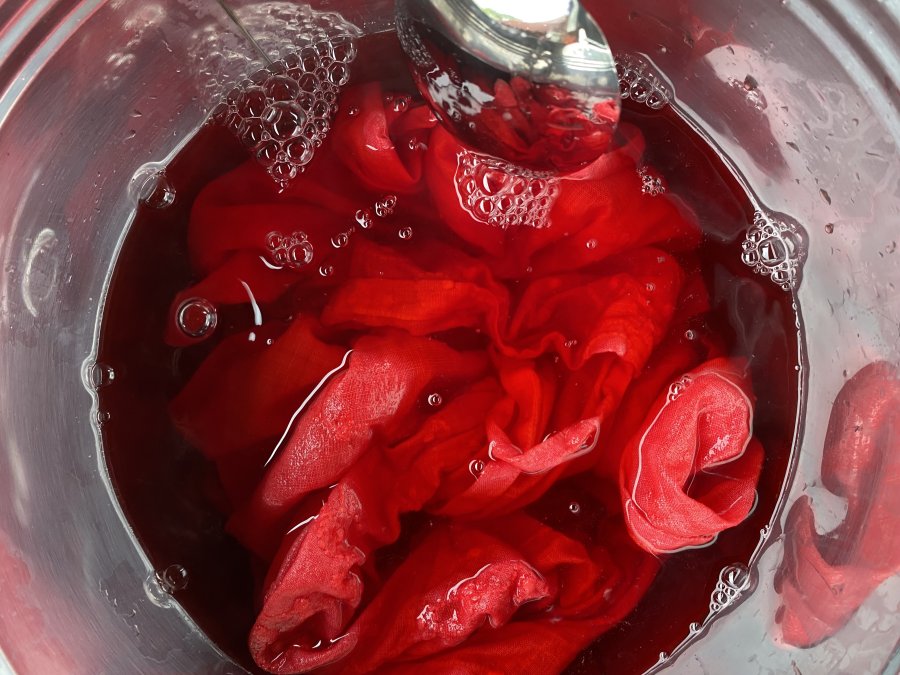
Temperature: why cotton needs warmth
Cotton is a cellulose fiber: its cellulose chains open when heated, allowing the dye to penetrate. For this reason, the ideal bath temperature is between 60°C and 90°C .
Maintain a stable temperature throughout the dyeing process. A bath that starts at 80°C and drops to 50°C halfway through the dyeing process produces a lighter color in the last-dipped area.
Times and agitation
Dyeing time is not a free variable: it depends on the liquor-to-fabric ratio and the temperature. With a 20:1 ratio and 60°C, 40 minutes is sufficient for a lightweight cotton.
Stir the bath before immersing the garment. Then shake every 5 minutes throughout the bath. Constant L distributes the color evenly and prevents the dye from settling in the creases.
Fiber benchmarks
Cotton doesn't behave like other fibers. These values are indicative and should always be checked with the dye's instructions.
- Pure cotton : 60-90°C, 20:1 ratio, 40-60 minutes.
- Cotton/polyester blend : 80-90°C, 25:1 ratio, 60 minutes; synthetic seams will remain lighter.
- Linen and viscose : 60-80°C, ratio 20:1, 40-50 minutes.
- Bamboo : 60-70°C, 25:1 ratio, 40 minutes; bamboo is delicate and tends to felt above 70°C.
If the result is lighter than expected, you can repeat the soaking process with the same amount. Cotton tolerates a second soaking well, as long as the garment is still damp.
How to Dye Clothes in the Washing Machine Without Mistakes
Dyeing clothes in the washing machine is the simplest method, if you follow the right rules. It's also the fastest for those who don't want to handle a pot.
Here is the procedure:
- Weigh the dry fabric and calculate the dosage.
- Place the wet item in the drum, without overloading.
- Pour the dye into the main compartment.
- Set a long cycle with hot water.
- Add an extra rinse cycle at the end.
Never exceed 2 kg of fabric per cycle. A full drum prevents the dye from circulating freely, resulting in patchy results.
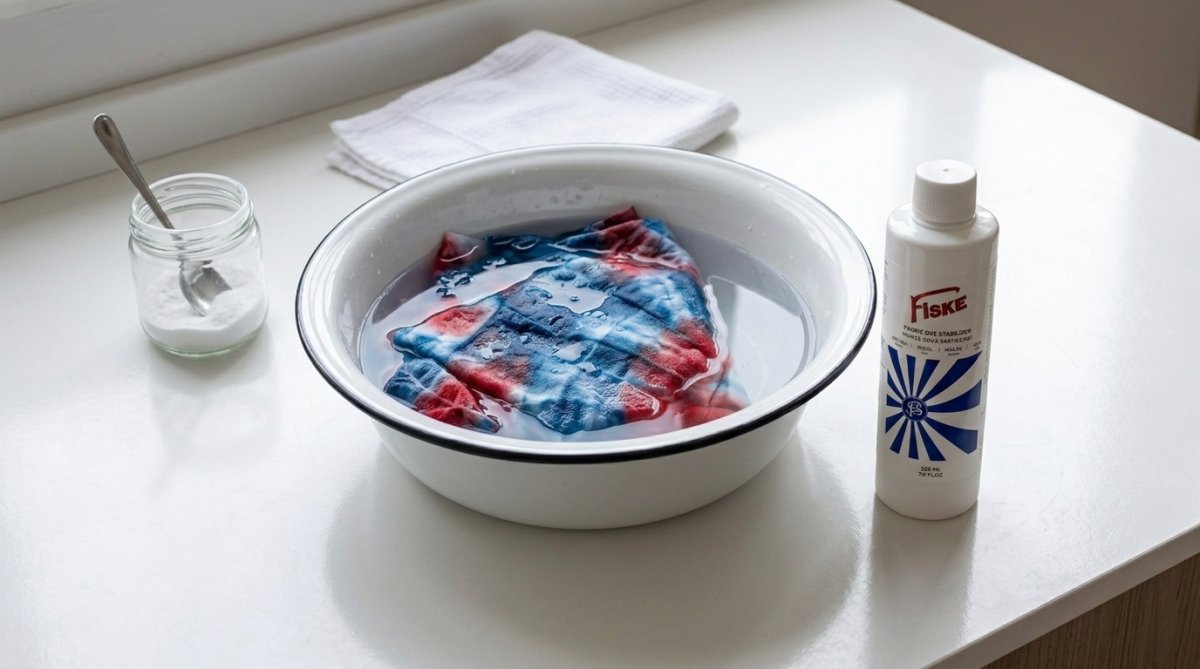
To fix the fabric, add Fiske Fixing Agent to the fabric softener compartment in the last rinse. Use 100 ml per 1-1.5 kg of dry fabric.
Dyeing Fabrics Without Stains: Manual Techniques
Dyeing fabrics without stains requires direct control over the process. With hand dyeing, you can see what's happening and make adjustments in real time.
The manual method works like this:
- Choose a pot large enough to accommodate the free end.
- Heat the water to the indicated temperature, then add the dye and let it dissolve completely.
- Immerse the wet fabric and stir continuously.
- Keep the heat constant at all times.
Use a wooden spoon or long tongs. Don't touch the bath with your bare hands; wear latex gloves.
For a more intense color, you can repeat the soaking process. Aybel fabric dye is available in 59 different colors and gives the best results on cotton, linen, viscose, and bamboo.
Fixing Color on Fabrics: Rinsing and Duration
Setting the dye on fabrics is the step many skip, and it's the reason the color fades after just a few washes. On cotton, setting plays an even more critical role: the cellulose fiber binds the dye on its surface, and without a fixing agent, that bond breaks after just the second or third wash.
Gradual rinsing: why temperature matters
After dyeing, rinse the garment in warm water until the water runs clear. Then gradually switch to cold water. A sudden change in temperature can cause thermal shock to the fibers and release the newly set color.
Rinsing should be done in several stages, not under a direct stream. Fill a basin, immerse the garment, gently move it, empty, and repeat. A direct stream creates zones of varying pressure that can leave light streaks.
How a fixative works
A fabric dye fixative is a compound that forms an additional bond between the dye and the fiber. On cotton, it acts in two ways: first, it blocks unbound dye molecules, and second, it creates a protective film that reduces color loss during washing.
Fiske Fixing Agent L designed for fabrics that are washed frequently or exposed to direct light. You can use it by hand or in the washing machine. In the washing machine, add it to the fabric softener compartment during the last rinse: 100 ml per 1-1.5 kg of dry fabric.
First wash and maintenance
The first wash after dyeing is the decisive test. Wait at least 48 hours before washing the garment, so that the dyeing process can complete. Wash alone at 30°C, with a gentle detergent and no fabric softener. If the water is clear, the dyeing process has been successful.
To maintain uniform color over time:
- Wash the garment inside out, at 30°C, on a short cycle.
- Avoid the dryer: dry heat stresses the fibers and fades the color.
- Dry in the shade, away from direct sunlight.
- Do not leave the garment to soak for hours: prolonged water gradually releases the color.
- Iron on medium heat, preferably inside out.
How to recognize a successful fixation
A well-done fixation can be recognized by three signs: the water from the first wash remains almost clear, the color leaves no traces on a damp white cloth, and after five washes the shade is still the same as the original.
Let the garment dry in the shade, away from direct sunlight. Sunlight fades the color even on well-fixed fabric.
Common Mistakes and How to Fix Dyeing Problems
Recognizing the defect is the first step to correcting it. Here are the most common problems and their solutions.
Problem |
Probable cause |
Solution |
|---|---|---|
Dark spots |
Unwashed or poorly shaken fabric |
Rewash and dye again with constant agitation |
Washed out color |
Low dosage or water too cold |
Increase the dose and heat the water to 60°C |
Light halos |
Basket overloaded |
Dye less fabric per cycle |
Fading color |
No fixative used |
Add Fiske to the last rinse |
Clear stitching |
Synthetic thread |
Normal: Polyester does not absorb color |
A common mistake is to dye a garment that is still dirty or has fabric softener residue.
If the result is too light, you can repeat the dyeing process. Cotton tolerates a second dyeing well.
For those who need large quantities, Aybel offers powdered dyes in 1 and 5 kg formats , designed for laboratories and small artisans.
Dyeing cotton at home requires method, not luck. Start with Aybel and bring your favorite pieces back to life, without buying new ones.
Frequently Asked Questions
How do you prepare cotton before dyeing it?
Wash the garment in hot water without detergent to remove fabric softener, residue from previous dyeing, and dirt. L softener creates a barrier that prevents the dye from penetrating evenly. Then, soak the fabric in warm water for at least 30 minutes before immersing it in the dye bath. Wring it out without spinning and keep it slightly damp: a wet fabric absorbs the dye more evenly than a dry one.
Why does cotton dye unevenly?
There are three main causes: dry or under-wet fabric when immersed, insufficient agitation during dyeing, and an unbalanced ratio of water to fabric weight. If the garment isn't able to move freely in the bath, the dye settles unevenly, creating stains and halos. An unstable temperature also contributes to the problem. Keep the bath warm and constant, and stir regularly throughout the dyeing process.
Can you dye cotton in the washing machine?
Yes, the washing machine is a practical option for dyeing clothes evenly. Use a long cycle with hot water and add the dye to the drum, not the drawer. For cotton, a 10g sachet dyes 250g of dry fabric optimally. Using less product will result in a lighter color. At the end of the cycle, run an additional rinse immediately to prevent the dye from settling on the creases.
How to fix the color after dyeing cotton?
After rinsing, add a fixing agent to the final rinse or to the fabric softener compartment if you're washing your clothes. Aybel Fiske is a professional fixing agent designed for fabrics that are washed frequently or exposed to direct sunlight. Use 100 ml of liquid per 1-1.5 kg of dry fabric. A 30 ml sachet is sufficient for one dye sachet. This step reduces color loss in subsequent washes and maintains the shade longer.