

Index
- Before you start: identify the fabric and do the safety test
- Natural remedies for faded clothes: salt, vinegar, and herbal teas
- How to dye cotton in the washing machine with Aybel dyes
- Why dye doesn't cover old stains and what to do about it
- Fixing: the step that makes the color last
- Common mistakes that cause clothes to fade and how to avoid them
- Post-treatment prevention: maintain shine over time
- Conclusion: Choose the right method to revive your clothes
- Frequently Asked Questions
Last updated: September 9, 2026
Before you start: identify the fabric and do the safety test
The 7 ways to revive the color of faded clothes only work if you start with the right material. Dyes and natural remedies work differently on natural fibers like cotton, wool, silk, and linen than on synthetic fabrics like polyester or acrylic, which often don't absorb color. In this guide from Aybel, you'll learn how to distinguish fabrics and choose the most effective treatment for each garment.
Check the label: cotton, viscose, bamboo, or polyamide promise good results. Pure polyester, on the other hand, resists most household dyes.
Before any treatment, do a safety test on a hidden area: apply a small amount of product and wait a few minutes to check the color retention. This step prevents you from ruining an entire garment.
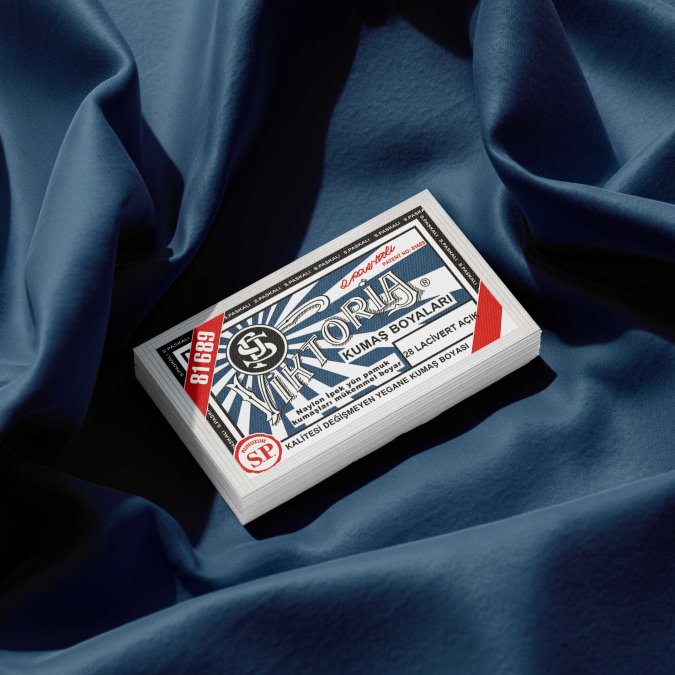
Natural remedies for faded clothes: salt, vinegar, and herbal teas
DIY remedies are the first solution to try to revive the color of faded clothes, especially when the discoloration is slight and uniform. But to achieve real results, you need to understand why they work and which fabrics they work on. Not all natural remedies are universal: their effectiveness depends on the chemistry of the fiber.
Coarse salt: the fixative for cellulose fibers
Coarse salt (sodium chloride) acts as an electrolyte: during washing, it helps residual dye molecules penetrate deeper into cellulose fibers like cotton, linen, and viscose. Add 150 grams to the drum or dissolve it in 5 liters of warm water for hand washing; soak for 30–40 minutes and rinse. For wool and silk, reduce the amount to 50 grams and use cold water to avoid felting and damage to delicate fibers.
Baking soda: deep cleaning, not dyeing
Baking soda doesn't add color: it acts as a gentle abrasive that removes the layer of detergent and limescale that dulls the fibers. 90 grams in the drum helps "unlock" the original color on cotton and polyester. On wool and silk, the alkaline pH can weaken the fibers; use vinegar instead.
White wine vinegar: the pH balancer
White L (5-6% acetic acid) restores the fiber's pH to a slightly acidic level (around 5), the ideal condition for retaining residual dyes. Add 100 ml to the final rinse or 200 ml to the fabric softener drawer. It works on cotton, linen, and viscose; on wool, it removes alkaline detergent residue. Don't use it on silk: the acidity can weaken the protein fiber.
Coffee and black tea infusions: only for dark garments and natural fibers
A concentrated coffee or black tea infusion can revive black, dark blue, or brown cotton, linen, or viscose garments. The active ingredient is tannin, which binds to the cellulose fibers and adds depth to the color. Prepare 470 ml of highly concentrated infusion (5 tablespoons of ground coffee or 4 black tea bags), let it cool, strain, and soak the garment for 30–60 minutes. On polyester and acrylic, the tannin doesn't bind: the result is a surface stain that disappears with the first wash. On wool, it may darken unevenly if the garment has fabric softener residue.
The fabric table: which remedy to choose
Remedy |
Cotton |
Linen |
Viscose |
Wool |
Silk |
Polyester |
|---|---|---|---|---|---|---|
Coarse salt |
✅ |
✅ |
✅ |
⚠️ with caution |
❌ |
❌ |
Bicarbonate |
✅ |
✅ |
✅ |
❌ |
❌ |
✅ |
White vinegar |
✅ |
✅ |
✅ |
✅ |
❌ |
⚠️ minimal effect |
Tea/coffee infusion |
✅ |
✅ |
✅ |
⚠️ non-uniform |
❌ |
❌ |
How to dye cotton in the washing machine with Aybel dyes
When natural remedies aren't enough, the most effective solution for reviving color is specific dye. Aybel Fabric Dye is suitable for cotton, wool, silk, linen, viscose, bamboo, and polyamide, and can be applied both by hand and in the washing machine. A 225 ml bottle dyes 1 kg of dry fabric, ideal for sheets, sofa covers, or bulky curtains.
Pour the dye into the drum, run a 30-40°C cycle without fabric softener, and let the garment absorb the color. For consistent results, use the correct amount: a 10g sachet optimally dyes 250g of dry fabric. Using less dye will result in a lighter color.
Method |
Product quantity |
Dyeable fabric |
Ideal for |
|---|---|---|---|
10g sachet |
1 sachet |
250g dry |
Single items |
Bottle 225 ml |
1 bottle |
1 kg dry |
Sheets, curtains |
1 kg pack |
1 kg |
25 kg dry |
Professional use |
Why dye doesn't cover old stains and what to do about it
The dye doesn't remove dirt, it just makes it less visible: on grease or sweat stains, the result is often disappointing, because the stains create a barrier that prevents the color from adhering evenly to the fiber.
Before dyeing, treat the stain with a mild stain remover or soap and water. The correct detergent dosage varies depending on the soiling: 50 ml for lightly soiled laundry, 80 ml for medium soiling, and 110 ml for heavy soiling. A specific pre-wash treatment increases the likelihood of an even result.
Fixing: the step that makes the color last
Fixing separates a professional result from one that fades after a few washes. After dyeing, the color must be stabilized to withstand frequent washing and sunlight. Aybel's Fiske Fixing Agent L a professional fixative for fabrics that are frequently washed or exposed to the sun.
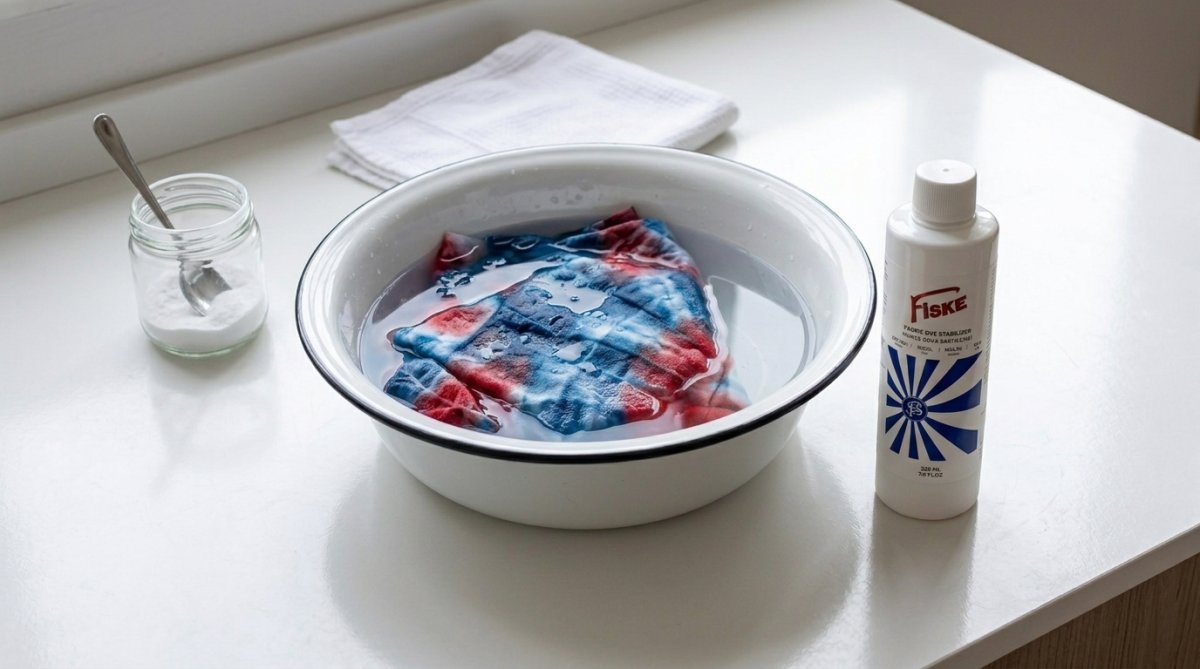
Add 100 ml of fixing liquid per 1-1.5 kg of dry fabric to the final rinse, or pour the product into the fabric softener compartment. A 30 ml sachet is sufficient for one dye sachet. This treatment prolongs the color's life and maintains its brilliance over time.
Common mistakes that cause clothes to fade and how to avoid them
Most fading results from repeated washing errors that damage the fiber structure and the chemical bond between the dye and the fabric. Understanding the mechanism behind each error allows you to prevent them specifically.
Error 1: Washing above 30°C, breaking the chemical bonds
Reactive dyes on cotton and linen bind to the fiber through chemical bonds that weaken with heat. At temperatures above 40°C, hot water vibrates the dye molecules and accelerates their detachment, causing progressive fading. For dark garments, the maximum temperature is 30°C; for light fabrics, 40°C is acceptable but not ideal. Synthetics such as polyester may undergo reversible thermochromic at 60°C, resulting in temporary lightening but permanent damage to the fiber structure.
Error 2: Overloaded basket, mechanical abrasion
When the drum is more than 70% full, garments rub together vigorously. This abrasion damages the surface layer of the fiber, where most of the dye is concentrated, creating "faded" areas on elbows and collars. A rule of thumb: Fill the drum no more than three-quarters full, with garments that fall freely when you open the door. For denim or heavy fabrics, reduce the load even further.
Error 3: Drying in direct sunlight, photodegradation of the pigment
UV rays break the chemical bonds in organic dyes, a process called photodegradation . It's not heat, but ultraviolet radiation that directly attacks the dye molecules; blues and blacks are particularly vulnerable because they absorb more light energy. L in the shade in a ventilated area reduces UV exposure by 90% compared to direct sunlight. If you must dry outdoors, hang your clothes inside out and dry them in the early morning or late afternoon.
Mistake 4: Excess fabric softener, the film that dulls
L softener contains silicones and fats that deposit on the fibers, creating an invisible film that refracts light differently, making colors less vibrant. It can reduce absorbency on technical fabrics and microfiber. Use sparingly: 30 ml per standard load is sufficient. Alternatively, white vinegar (100 ml in the final rinse) performs the same function without leaving residue.
Error 5: Too much detergent, the residue turns yellow
Excessive detergent L is a lesser-known but very common mistake: excess detergent isn't rinsed out completely and settles on the fibers, creating a whitish residue that dulls colors and can yellow light-colored garments. The dosages indicated are for a standard 4-5 kg load with medium-hard water. With soft water, reduce the dose by 20-30%; with very hard water, increase by a maximum of 10%.
Mistake |
Damage mechanism |
Visible signal |
Solution |
|---|---|---|---|
Wash above 30°C |
Breaking of dye-fiber bonds |
Uniform fading |
Cold or 30°C cycles |
Basket overloaded |
Surface mechanical abrasion |
Faded areas on elbows and collar |
Max load 75% |
Direct sun |
UV photodegradation of the pigment |
Discoloration on shoulders and sleeves |
Dry inside out, in the shade |
Excess fabric softener |
Surface silicone film |
Dull and opaque colors |
Max 30 ml, or replace with vinegar |
Excess detergent |
Whitish residue on the fibres |
Cloudiness and yellowing |
Follow the dosages, rinse well |
Post-treatment prevention: maintain shine over time
After reviving the color, the challenge is maintaining it. From the first wash after the treatment, turn the garments inside out, use a gentle detergent, and set a short cycle at low temperatures. These precautions prolong the dye's results and reduce the frequency of future treatments.
For more delicate items, consider hand washing in cold water and a specific detergent. Avoid bleach and whitening products, which directly attack the pigment. If you notice slight fading after a few months, a new dye cycle or fixative can refresh the color without replacing the item.
Conclusion: Choose the right method to revive your clothes
The 7 ways to revive the color of faded clothes range from the most economical natural remedy to professional dyeing, and the choice depends on the type of fabric, the extent of the fading, and the desired result. For light discoloration, salt, vinegar, and baking soda may suffice. For a complete color restoration, machine-applied dye is the fastest and most long-lasting solution.
Aybel offers a full range of dyes for natural and semi-synthetic fibers, with the option of hand or machine dyeing. With Fiske Fixing Agent for just €4.99 and dyes starting at €4.99, you can achieve professional results at home, refreshing your wardrobe without buying new items. Get started today and discover how easy it is to revive your favorite clothes.
Frequently Asked Questions
How to restore color to faded clothes naturally?
Natural remedies work on fabrics like cotton, linen, and viscose. Add 150 grams of coarse salt to the washing machine drum to revive colors, or 90 grams of baking soda. For dark clothes, a coffee or black tea infusion (about 470 ml) can restore the depth of the color. White L in the rinse helps fix the colors. These methods are gentle but less intense than actual dyeing.
Why doesn't dye cover old stains on fabrics?
Oily or greasy stains repel water and prevent the dye from adhering to the fiber. Fabric softener residue also creates a barrier. Before dyeing, treat stains with a specific detergent and a 30°C wash cycle. If the stain persists, the final result may be uneven. For heavily stained garments, consider a dark, solid dye, which will provide a more even result.
How to dye cotton in the washing machine without ruining the garment?
Check the label: 100% cotton absorbs dye well. Use Aybel powder or liquid dye, following the recommended dosage: a 10g sachet dyes 250g of dry fabric. Set a 30-40°C cycle without prewash and add the dye to the drum. Finally, run a rinse cycle with white vinegar to set the color, then wash the garment alone for the first time.
How long does the effect of a DIY fabric dye last?
With good hold, the color will last through numerous washes. After dyeing, use Aybel's Fiske Fixing Agent (€4.99): add 100 ml per 1-1.5 kg of fabric to the final rinse or fabric softener compartment. To maintain brightness, wash garments at low temperatures, turn them inside out, and dry them in the shade. Fabrics exposed to direct sunlight fade faster.
Does dye work on synthetic fabrics like polyester?
Aybel's traditional dyes are formulated for natural and semi-synthetic fibers: cotton, wool, silk, linen, viscose, bamboo, and polyamide. Polyester and some types of acrylic do not absorb these dyes. For these materials, you can try spray dye, which creates a tight-fitting coating on the surface. Always check the garment's composition by reading the label before purchasing.