

Index
- What you need to dye silk at home: materials and equipment
- Preparing Silk Fabric for Dyeing: Scouring and Repairing
- Silk dyes: acidic, natural, and synthetic dyes compared
-
How to Dye Silk at Home: Step-by-Step Dyeing Process
-
Fixing Silk Color: How to Make Your Dye Last Longer
-
Washing silk after dyeing: rinsing and garment care
-
Common mistakes to avoid and environmentally friendly disposal of dye bath
-
Conclusion
Publication date: August 4, 2026
Dyeing silk at home is one of the most effective ways to extend the life of a precious garment, yet most online guides treat the topic as if silk were the same as cotton. Dyeing silk requires a specific understanding of protein fibers, temperature control, and the right dyes. Aybel developed this guide for those who want professional results without ruining a beloved garment. You'll find the complete process from fabric preparation to final fixing, choosing the right dye, mistakes that ruin the result, and how to dispose of the dye bath responsibly. Silk is not fragile by definition: it is sensitive to heat and extreme pH, but with the right care, it responds to dyeing remarkably, absorbing colors with a depth unmatched by any other fabric.
What you need to dye silk at home: materials and equipment
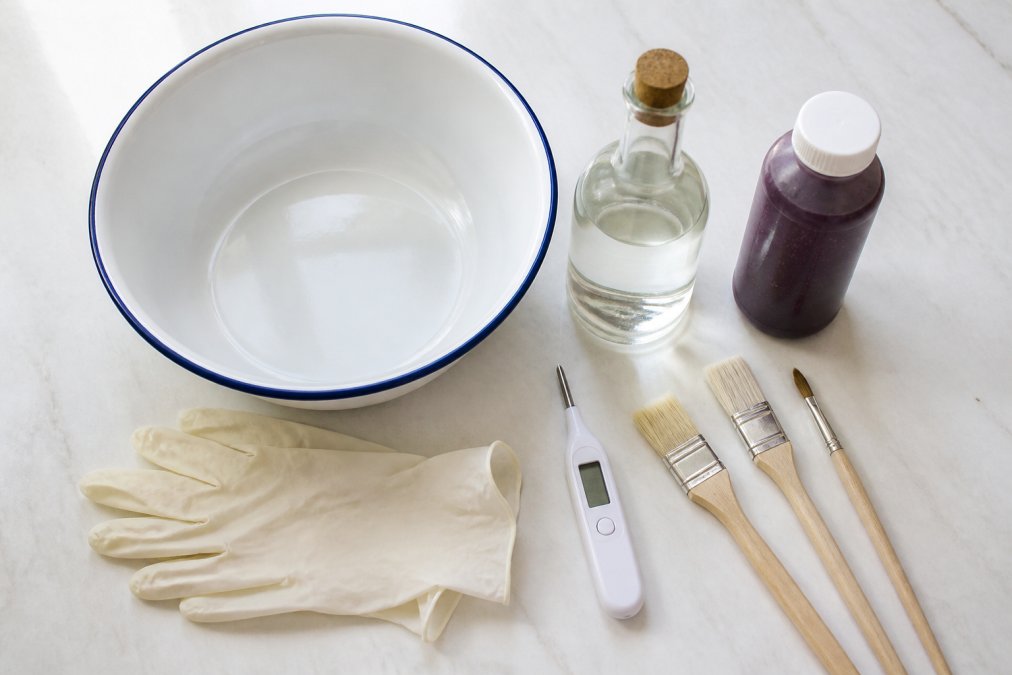
Having everything you need ready before you begin is the difference between a uniform result and a messy mess. Here's the complete list:
- Fabric dye suitable for silk : choose an acid dye or one specifically designed for natural fibers. Aybel Fabric Dye is formulated for cotton, wool, silk, linen, viscose, and polyamide, and is available starting at €4.99.
- Fixing agent : essential for setting the color. Aybel's Fiske Fixing Agent L €4.99 can be used both by hand and in the washing machine.
- Enamelled or stainless steel bowl : do not use aluminum containers, which react with acid dyes.
- Kitchen thermometer : silk does not tolerate temperatures above 60°C.
- Nitrile or latex gloves : basic protection.
- White wine vinegar : Acts as a natural mordant for acid dyes on silk.
- Table salt : promotes uniform saturation.
- Dedicated wooden spoon or stick : Do not reuse for food after dyeing.
- Plastic sheet or newspaper : protect the work surface.
Specific equipment for small quantities of fabric
For small quantities, like a scarf or blouse, a 5-8 liter basin is sufficient. The ideal ratio is about 10 liters of water for every 100 grams of dry fabric. The Aybel Multipurpose Brush Set for €14.95 is useful for spot applications or degradé effects. A kitchen scale completes the equipment: knowing the exact weight of the fabric allows you to measure the dye correctly.


Preparing Silk Fabric for Dyeing: Scouring and Repairing
Fabric preparation is the most frequently skipped step and causes uneven results. New silk contains residues of industrial sizing agents; used silk accumulates body oils and detergent residues that prevent the dye from penetrating evenly.
The process is called degreasing : thorough washing with a pH-neutral detergent in warm water no higher than 30°C for 15-20 minutes. Do not use fabric softeners. After washing, wrap the silk in a clean towel and squeeze gently. Keep it damp until dyeing: silk absorbs the dye much more evenly when wet.
How to repair damaged silk before you start
Dyeing silk that's already damaged doesn't hide defects; it amplifies them. Areas with weakened fibers absorb dye differently, creating dark spots. Inspect the garment against the light before proceeding. For small fraying spots, an invisible stitch with a silk thread of the same color is sufficient. If silk has been damaged by bleach, those areas have permanently lost their protein fibers; dye won't restore them.
Silk dyes: acidic, natural, and synthetic dyes compared
Choosing the wrong dye is the most costly mistake. Reactive dyes, used for cotton, won't work on silk without treatment with sodium carbonate, which damages the protein fibers. Silk requires an acid dye or a mordanted natural dye.
| Type of dye | Suitable for silk | Fixative needed | Resistance to washing | Difficulty of use |
|---|---|---|---|---|
| Acid dye | Yes | Vinegar or specific fixative | High | Average |
| Natural dye | Yes | Mordant (alum, tannin) | Average | High |
| Fiber-reactive dye | No (it damages the fibers) | Sodium carbonate | High on cotton | Average |
| Universal synthetic dye | Yes (with vinegar) | Specific fixative | Medium-High | Low |
Acid dyes are the professional choice: they bind directly to protein fibers in an acidic environment, producing bright colors and good colorfastness. Natural dyes like indigo are attractive and sustainable, but they require a mordant and generally have poorer colorfastness.
Color theory for overdyeing: how to choose the right shade
Overdyeing is the act of dyeing a garment that already has a color. The final color is the sum of the original color and the applied dye. A yellow garment dyed with blue will produce a green; a red garment dyed with blue will produce a purple or brown. To cover a light color with a dark one, the dye almost always wins. However, it's not possible to lighten a dark color without first bleaching, but remember: silk cannot be bleached easily without damage.
How to Dye Silk at Home: Step-by-Step Dyeing Process
The silk dip dyeing process follows a precise sequence. Skipping any step compromises the result.
Total time: approximately 60-90 minutes Difficulty: medium
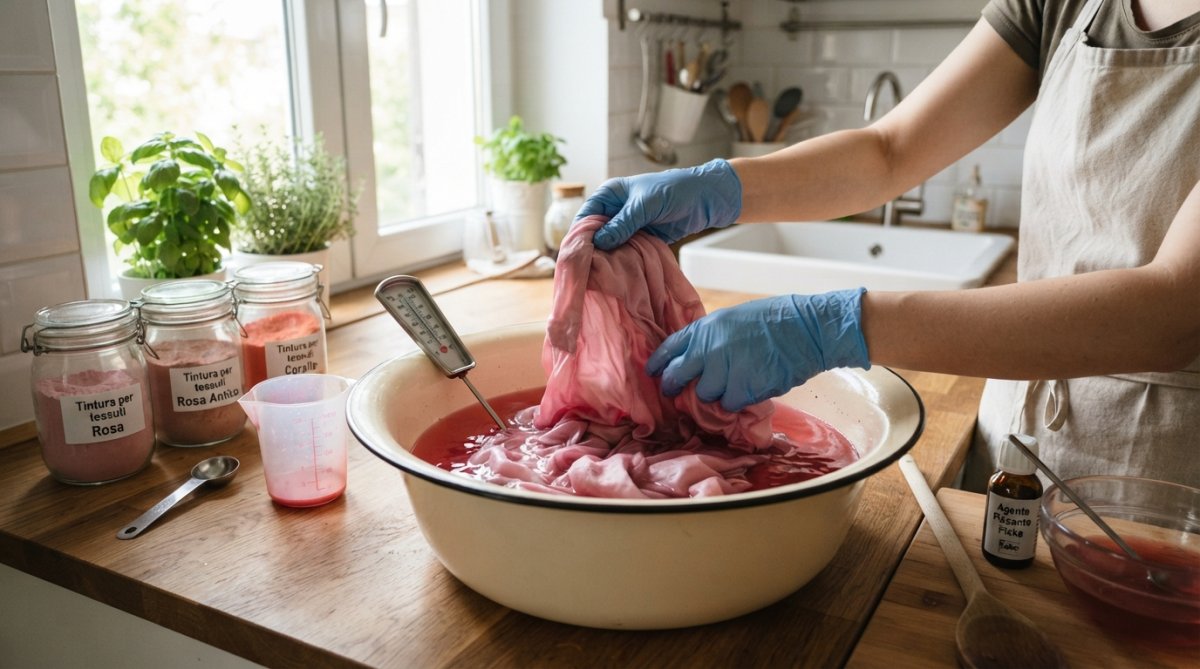
- Prepare the dye bath : Fill the basin with hot water at 50-55°C. Do not exceed 60°C. Add 100-150 ml of white vinegar for every 5 liters of water.
- Dissolve the dye : Mix the Aybel dye in hot water separately before adding it. This prevents lumps and ensures even distribution.
- Add salt : 2-3 tablespoons for every 5 liters of water helps slow the initial absorption.
- Immerse the wet fabric : the garment should already be damp. Immerse slowly, avoiding creases.
- Stir continuously for the first 10 minutes : this is the critical moment. Use the wooden spoon to turn the fabric every 30-60 seconds.
- Maintain a constant temperature : check with a thermometer every 5 minutes.
- Continue for 30-40 minutes in total : after the first 10 minutes you can reduce the frequency of the movements.
- Gradually increase the temperature in the last 10 minutes : bringing the bath to 58-60°C helps to set the dye.
Fixing Silk Color: How to Make Your Dye Last Longer
Color fixation determines how long the color's brilliance will last. Many skip this step, thinking the dye has already set during the dyeing process, but this is a mistake that only becomes apparent after the first wash.
The fixative works by creating an additional bond between the dye and the protein fibers. For silk dyed with acid dyes, Aybel's Fiske Fixative is specifically designed for this purpose.
The fixing process:
- Prepare lukewarm water at about 30°C
- Add the fixative according to the product directions
- Soak the garment for 15-20 minutes, moving it periodically
- Do not rinse after the fixative: let the product work
The color fastness achieved with a professional fixative is significantly higher, especially for bright colors such as bright lilac ordeep pink .

Washing silk after dyeing: rinsing and garment care
After setting, rinsing is the final technical step. Doing it wrong means watching the color fade in the water for weeks.
Proceed as follows:
- First rinse : warm water at the same temperature as the dye bath. Sudden temperature changes can cause silk to shrink.
- Second rinse : slightly cooler water, with a few drops of white vinegar. This seals the fibers and stabilizes the color.
- Third rinse : cold water, until the water is almost clear.
For the next wash, always use a pH-neutral detergent specifically designed for delicates and cold water. Avoid high-speed spin cycles: wet silk is fragile. The best method is to wrap the garment in a clean towel and gently wring it out, then lay it flat to dry on a dry surface away from direct sunlight.
Common mistakes to avoid and environmentally friendly disposal of dye bath
Mistake 1: Temperature too high. Silk is irreversibly damaged above 60°C. The protein fibers contract and the fabric loses its characteristic texture.
Mistake 2: Fabric not soaked before immersion. Dry silk absorbs the dye unevenly, creating dark stains.
Error 3: Dye not fully dissolved. Undissolved dye granules settle on the fabric, creating concentrated stains.
Mistake 4: Insufficient movement. The silk should move continuously, especially in the first 10 minutes.
Ecological disposal of the dye bath
Used dye bath contains dyes, vinegar, and salt. It's not as dangerous as industrial solvents, but it shouldn't be disposed of in large quantities down the sink without taking precautions. According to Legislative Decree 152/2006, dilute it generously with water before discharging it into the municipal sewer system, which is equipped with adequate treatment systems. Avoid disposing of dye bath in waterways, gardens, or permeable soils.
A common practice is to collect the used dye in containers and take it to municipal waste sorting centers for special liquid waste. However, for all-natural dyes like turmeric or gall nut, the used dye is generally compostable, as long as it doesn't contain metal mordants.
| Common mistake | Cause | How to avoid it |
|---|---|---|
| Stains and halos | Dry or still fabric in the dye bath | Wet the fabric first, move it continuously |
| Color fades quickly | No fixative used | Use Fiske Fixing Agent after dyeing |
| Damaged silk | Temperature above 60°C | Check with thermometer every 5 minutes |
| Irregular color | Colorant not completely dissolved | Dissolve the food coloring in hot water separately |
| Shrinkage of the tissue | Thermal shock during rinsing | Rinse with water at the same temperature as the bath |
Final considerations
Dyeing silk at home is a process that rewards precision rather than experience. With the right tools, controlled temperatures, and a professional fixative, the results are stunning even on the first try. The real obstacle isn't technique; you need products formulated for protein fibers, not generic ones. Aybel offers specific dyes for silk, wool, and natural fibers, a professional fixative, and personalized support to help you choose the right shade. Discover the full range at aybel.shop and transform the clothes you love instead of replacing them.
Frequently Asked Questions
Is it possible to dye silk at home without professional equipment?
Yes, dyeing silk at home is possible with simple tools: an enameled or stainless steel basin, a kitchen thermometer, rubber gloves, and an acid dye suitable for protein fibers. Silk absorbs color evenly if the water is kept at a constant temperature, around 50-60°C, and the garment is moved regularly during the dye bath.
What is the best dye for silk garments?
Silk is primarily dyed with acid dyes, formulated for protein fibers like silk and wool. They work in an acidic environment, created by adding white vinegar to the dye bath. Aybel dyes are compatible with silk, wool, linen, viscose, and other natural fibers, and can be applied both by hand and in the washing machine. Avoid reactive dyes designed for cotton: they produce poor and short-lasting results on silk.
How do you fix the color on silk after dyeing?
Setting the color on silk requires a specific fixative after rinsing. Aybel's Fiske L (€4.99) can be used by hand or in the washing machine and increases the color's resistance to subsequent washes. Without a fixative, the color tends to fade after the first few washes. A final rinse with cold water and a pH-neutral detergent completes the process and preserves the integrity of the fiber.
How do you properly dispose of dye bath water in Italy?
In Italy, the disposal of wastewater containing textile dyes for household use is regulated by Legislative Decree 152/2006 (Environmental Code). For small household quantities, it is generally permitted to pour the diluted dye water into the municipal sewer. Always check the regulations of your local water supplier. To reduce the impact, dilute generously with running water and use dyes free of heavy metals, such as those from Aybel.
How do you avoid patchy color when dyeing silk at home?
Stains form for three main reasons: silk not thoroughly cleaned before dyeing, uneven bath temperature, or the garment left undisturbed. For even saturation, wash the garment with a pH-neutral detergent before starting, maintain a constant temperature with a thermometer, and continually move the silk in the dye bath. A brush can help apply color precisely to difficult areas.
This article was written using GrandRanker