

Index
- Why fabrics fade: the main factors
- How to Brighten Clothes Colors: Protection and Prevention
- DIY Fabric Color Fixing: The Role of Fixatives
- Why dye doesn't cover old stains
- Water hardness and dye migration
- Natural vs. Synthetic Fibers: Differences in Fading
- Conclusion
Last updated: August 24, 2026
Why fabrics fade: the main factors
Fabrics fade due to a combination of chemical and physical factors that act on the fiber and the dye. Understanding why color fades is the first step to protecting your favorite garments.
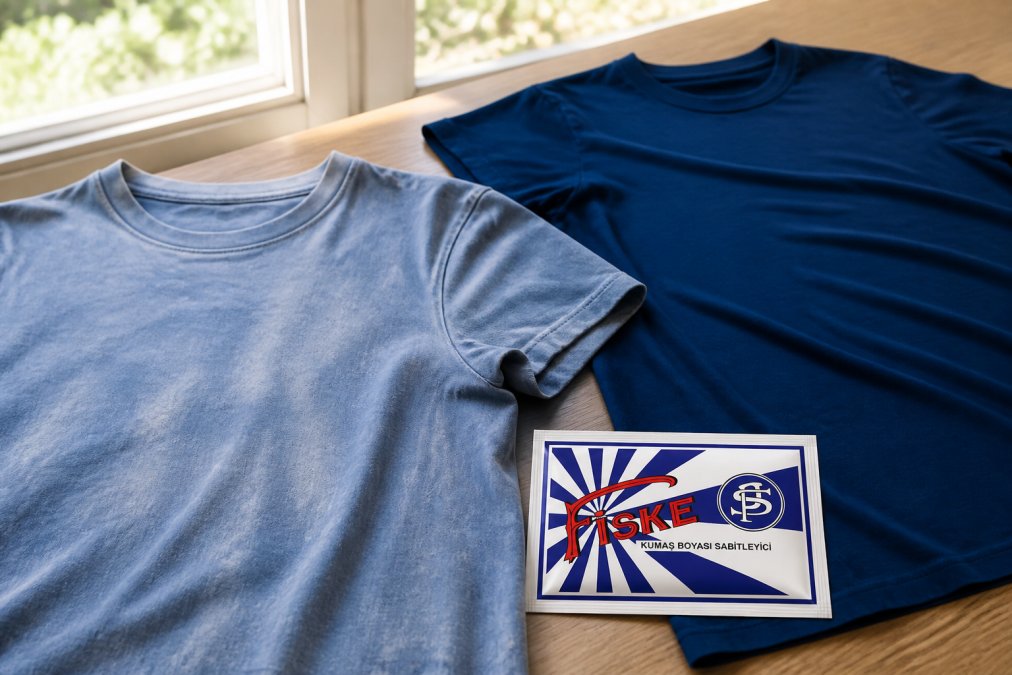
Molecular degradation and bond breaking
When the dye binds to the fiber during dyeing, it creates a chemical bond that isn't permanent. Over time, energy (heat, light, motion) breaks that connection, and the pigment separates from the fiber.
Reactive dyes, commonly used for cotton, are particularly sensitive to temperature. Heating from 20 to 40 degrees Celsius significantly accelerates the desorption of the dye (datacolor.com). Once the dye leaves the fiber, it does not return naturally.
Detergents play an important role: surfactants act as "carriers" that help the dye separate from the fiber and dissolve in water. Consequently, a harsh detergent accelerates fading even at moderate temperatures.
Ultraviolet radiation and direct sunlight
Ultraviolet light breaks the chemical bonds in pigments through a photochemical reaction, causing irreversible fading. When you expose a garment to direct sunlight, you accelerate the photodegradation of the chromophores (the molecules that give the dye its color).
This is particularly harmful for garments hung out to dry in the sun or curtains exposed to direct sunlight. Even indirect exposure through a window causes damage over time. Natural dyes are particularly vulnerable to UV rays and require special protection during storage.
How to Brighten Clothes Colors: Protection and Prevention
Protecting your color starts the moment you finish dyeing. Aybel has helped thousands of people maintain their newly dyed clothes with simple yet effective techniques.
Low temperatures and delicate cycles
Washing at low temperatures (15-20 degrees Celsius) significantly reduces the rate of dye desorption. Gentle cycles reduce the mechanical agitation that physically abrades the fibers and removes the dye. For new garments, the first three washes are critical: this is when the dye, which has not yet fully set, is most vulnerable.
The final rinse in cold water is essential to remove any loose surface dye before it reaches the washing machine.
Choice of detergents and chemical composition
Not all cleaners are created equal when it comes to protecting color. Color-specific cleaners contain gentler formulations that clean without damaging the dye-fiber bond.
Avoid detergents containing optical brighteners, which can react with dyes and cause unexpected shade changes. L (bleach) is particularly harmful: even small amounts accelerate the degradation of the dye.
Protection from light and proper storage
Store colored garments in closed closets or opaque containers away from direct light. Stable temperatures between 15-20 degrees Celsius and relative humidity between 45-55% slow down chemical degradation processes.datacolor.com). If you hang clothes, avoid direct light from windows.
DIY Fabric Color Fixing: The Role of Fixatives
Fixing transforms a temporary dye into a long-lasting one. Without the right fixative, even the best dye will fade quickly. Aybel provides professional fixing agents like Fiske Fixing Agent, specifically formulated to maximize colorfastness.

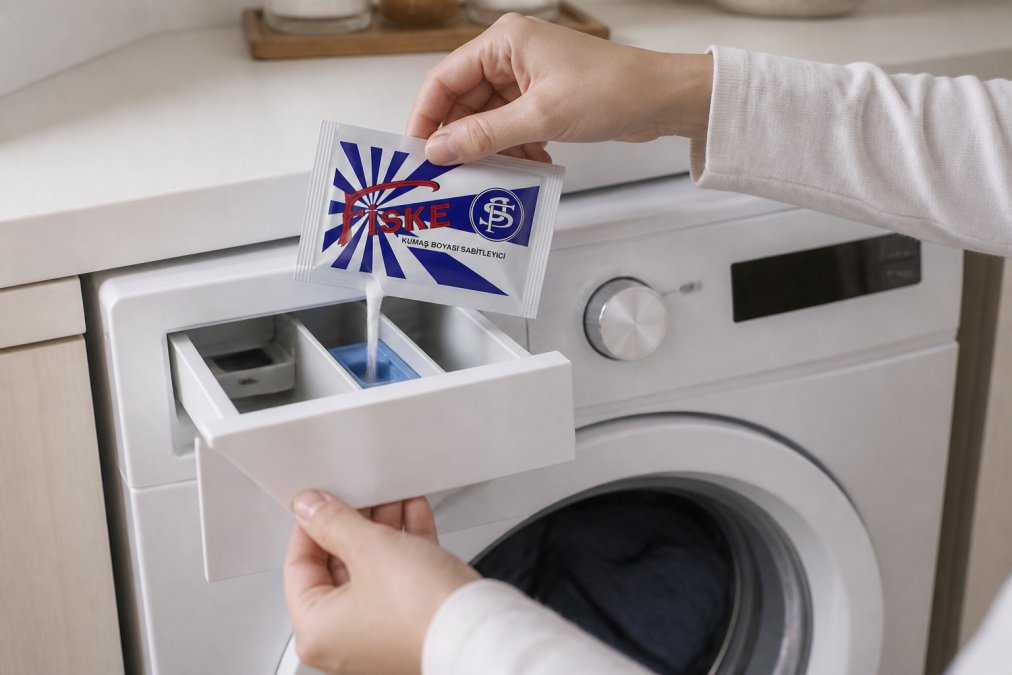
How sodium carbonate and professional fixatives work
Soda ash (sodium carbonate) is one of the most effective fixatives for reactive dyes. It works by altering the pH of the water, creating an alkaline environment in which the dye forms stronger covalent bonds with the cotton fibers. For machine dyeing, it is used during the final rinse to "fix" the remaining dye.
Aybel's Fiske Fixing L can be used in both the washing machine and by hand, adding it to the final rinse cycle or to the fabric softener compartment. It's formulated for fabrics that are washed frequently or exposed to direct sunlight. At €4.99, it offers professional protection at an affordable price for DIYers.
pH balance and color fastness
The final pH of the dyed fabric is critical: if the finished fabric comes out of the dyeing process with a pH outside the 6.0-7.5 range, it may still contain active chemicals that will react with household detergents during the first wash, causing unexpected color changes.
An unbalanced pH means the dye isn't fully set. L final rinse water should be neutral to stabilize the dye-fiber bond. If you use very hard water, these minerals can alter the pH and reduce the effectiveness of the fixation.
Why dye doesn't cover old stains
A common question is why you can't simply re-dye a garment to cover stains or yellowing. The answer lies in the science of fiber absorption.
Fiber absorption and fabric type
Each textile fiber has a maximum dye-absorbing capacity. Cotton is porous and readily absorbs dye, but its capacity is limited. Once a fiber is saturated, new dye simply won't bind.
Silk requires more delicate dyeing processes and is sensitive to heat. Wool absorbs dye quickly but can shrink at high temperatures. Synthetic fibers like polyester have a dense structure and do not absorb standard dyes as readily.
If your garment is a blend of different fibers, each fiber will absorb the new dye differently, creating uneven results.
Old stains are the result of chemical degradation of the fiber itself. Dyeing a stain doesn't cover it; the new dye simply won't stick to the damaged area.
Mechanical abrasion and crocking
Crocking is the physical abrasion that removes color through friction during washing or use, particularly visible at seams and cuffs. Fabric density influences crocking resistance: tighter knits reduce the exposed surface area.
For natural dyes, managing crocking in dark shades is a challenge. If a garment has already suffered significant crocking, re-dyeing won't fix it. You must first stabilize the remaining color with a fixative.
Water hardness and dye migration
Hard L , rich in calcium and magnesium ions, accelerates fading. During dyeing, these minerals compete with the dye for binding sites on the fiber, reducing the amount of dye that actually binds.
During the next wash, hard water accelerates dye migration. If you live in an area with very hard water, investing in a water softener or using filtered water for dyeing will make a noticeable difference in color retention.
Natural vs. Synthetic Fibers: Differences in Fading
Natural and synthetic fibers fade for different reasons. Natural fibers like cotton, wool, and silk are hygroscopic: they absorb and release moisture from the environment. This constant movement of water accelerates the degradation of the dye. Cotton is particularly vulnerable because it is highly porous.
Synthetic fibers like polyester and nylon have a dense structure and are not hygroscopic. The dye remains more stable, but they require special dyes and higher dyeing temperatures.
Viscose is a semi-synthetic fiber that combines the properties of both. It absorbs dye as readily as cotton, but has a more uniform structure that produces more consistent colors. If your garment is a blend, each fiber will absorb the dye differently, creating an uneven result. Aybel offers dyes suitable for natural and semi-synthetic fibers.
Protecting the color of your favorite garments isn't complicated, but it does require an understanding of the factors that cause fading. Water temperature, UV light, the quality of the fixative, and the type of detergent all play a role. With Aybel Fiske as a fixative and the right washing and storage techniques, you can keep your fabrics vibrant for much longer. Start with low temperatures, protect from direct light, and always use a quality fixative after dyeing.
Frequently Asked Questions
Q: How can I prevent fabrics from bleeding color during washing?
A: Wash your clothes at low temperatures (20-30 degrees Celsius) on a delicate cycle. Use detergents specifically designed for dark colors and no bleach. Separate garments by color, especially the first few times. Turn garments inside out before washing. Apply a fixative like Aybel Fiske in the final rinse to increase colorfastness and protect fabrics from future fading.
Q: Why do colors fade faster after rinsing?
A: During rinsing, unfixed dyes separate from the fibers and dissolve in the water. If the fabric hasn't been rinsed properly at the factory or if you don't use a fixative, the color will continue to fade with each wash. Hot water and harsh detergents accelerate dye desorption. A professional fixative creates a stronger chemical bond between the dye and the fiber.
Q: What is the best fade-resistant fabric dye?
A: Colorfastness depends on the quality of the dye and proper fixation. Reactive dyes for cotton and acid dyes for wool offer good colorfastness when applied correctly. Always use a quality fixative like Aybel Fiske and follow the rinsing instructions. Reactive dyes are expected to hold 44% of the market share by 2025.
Q: How can I revive the colors of clothes that have already faded?
A: You can revitalize faded garments by completely re-dyeing them. Choose a dye suitable for the type of fiber (cotton, wool, silk) and apply a fixative like Aybel Fiske to ensure durability. For even results, pre-rinse the garment in warm water and make sure it's damp before dyeing. Use water at the right temperature and follow the recommended exposure times for complete and even coverage.